Irish Lore Last Person to Run Over the Hill Is Never Seen Again

The Castle Pines Connection serves residents of the Wildcat Mountains, a name pioneers and historians gave to the Colorado loftier state paralleling I-25 from Highlands Ranch and Solitary Tree due south to Castle Rock. Since the showtime territorial route (Daniels Park Road) bisected our mountains, in that location was no shortage of colorful characters parading through what are now private properties on the ridges of Douglas County. Nosotros bring these grizzled and gutsy settlers live once again, vividly sharing their stories of grit and achievement in these Castle Pines.
Mutiny Lore is dedicated to digging a bit deeper in the cranium of Douglas Canton history to better understand the life and motivations of local pioneers.
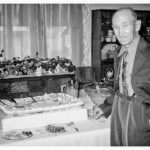
By Joe Gschwendtner; photo courtesy of Sedalia Firehouse Museum Charlie Alexander was one of Sedalia's more colorful locals, born a Hoosier in 1882. His early on years were filled with hardship, and he was placed on an orphan train by his mother when he was 11 years old. He was one of 250,000 such children shipped…
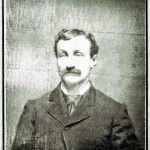
By Joe Gschwendtner; courtesy photos Adam Martz, perchance Sedalia's most famous bachelor, was no shrinking violet. Those who have opined on his life, declared that he was never outsmarted. In a bit of hyperbole, the Castle Stone Journal in one case reported in print that "any person who thinks he can go the best of Adam (by…
Commodity and photos past Joe Gschwendtner Precisely 150 years ago, ranchers on Due west Plum Creek acted on a need for their own church home in Bear Canon. Newton S. Grout, a sometime Spousal relationship Army drummer, was chosen to lead the 1872 structure attempt. He began by demolishing a archaic log schoolhouse on the site. Originally…
Past Joe Gschwendtner; photo courtesy of the files of Sedalia History Museum and Gardens; courtesy photo Victor Marquis started his life off restlessly, a claiming from birth on. Born in 1839, in Avesnes, France, no i could actually control him. Seeing the town every bit a hopeless identify, at simply nine years of age, he stowed…
Past Joe Gschwendtner; photos courtesy of the Sedalia Historic Museum and Gardens Jarre Canyon in Sedalia has been a prolific source of Douglas County history, attracting those among the most dynamic men and women of the County. And so also, with Esme Harcourt Williams Burrow. Charles Harcourt was born in Blatherwycke, England in 1869. Immigrating to…
Past Joe Gschwendtner; paper clipping courtesy of Kyle Scott No one exactly knows why Alexander Scott Sr. chose Castle Rock to homestead. Built-in in Arbroath, Scotland in 1840, he married Jane Morton in 1865. The couple wanted more, at to the lowest degree more Arbroath offered, and immigrated to America a year later. After a 3-year stay…
Article and photo by Joe Gschwendtner History Colorado recognizes ranches and farms operated by the same family for over a century. Eight properties in Douglas County have received the coveted Colorado Centennial Farms & Ranches award. Though buying recently changed, the family continuity of the Winkler Ranch was 55 years greater than so its nearest…
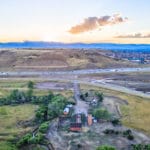
Past Joe Gschwendtner; photo courtesy of Rose Tuggle Collection of the Schweiger Ranch Foundation John Schweiger was raised in Zell am Ziller, Tirol, Austria. Draftable into the Austrian army, he constitute a berth on an American-bound ship out of Bremen days before he turned 21 in 1867. Stateside, John plant work in Tennessee and Georgia'due south…
Past Joe Gschwendtner; photos courtesy of Sedalia Historic Museum and Gardens In 1897, President Grover Cleveland began to protect America's resources, designating 21 million acres of timberland as National Wood. He appointed Colonel W.South. May as his Colorado and Utah Forestry Superintendent who then immediately advertised the demand for rangers. A determined 20-twelvemonth-former Sedalian, William…

By Joe Gschwendtner; photos courtesy of the DCL archives and Local History Section Unlike both his begetter and blood brother, Mort Penley was not a man of the material. The beauty of the English Cotswolds could as well not hold him. In 1878, his 20th twelvemonth, he sought new horizons. Crossing the Atlantic on the steam vessel…
Past Joe Gschwendtner; courtesy photos This tale of two towns begins with Junietta Patience Freelove Peckham and Orello E. Frink (O.East.), who were married in DeRuyter, New York in 1877. Both driven and assuming, they went due west with their three children, making Denver home. O.Eastward. succeeded early in meat retailing and milk processing. In 1893,…
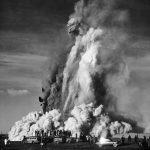
Past Joe Gschwendtner; photograph courtesy of Western History Section, DPL Outliers brand for legends. Bengt August ("Gus") Nelson was i of them. Born in Falkenberg, Sweden in 1863, information technology was Gus' destiny to go a great one. Great granddaughter Jo Nelson Bradford chosen him "a tough old bird." At xviii, Gus took passage on a…
By Joe Gschwendtner; courtesy photos William Thompson Lambert was born in 1850 to devout Quakers Joseph and Cynthia (Meader) Lambert of Blackstrap, Maine. William was an only child, sickly at that, with bleeding lungs. His frail condition was likely the chief factor in the family's migration westward in 1856 for a drier climate. Muscatine, Iowa,…
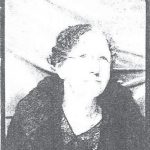
By Joe Gschwendtner; photos courtesy of Fern Adams 70-six years old with 42 grandchildren makes for an epic story at any time. Perhaps being born on July iv, 1857 was a portent. Spring 1865 plant Emma Jane in Waterloo, Iowa with sisters Ida, Eva, Etta and Nellie in a Conestoga wagon, wearing sunbonnets heading west.…

By Joe Gschwendtner; courtesy photos In 1859, Sarah Coberly operated a halfway business firm residuum cease in Huntsville, on the stage road to Colorado Springs. Husband James died early of an Indian arrow in Franktown. She had three daughters, Hersa, Mattie and a 3rd, the adopted Lizzie Fields. Hersa first met the gallant Silas Soule as…
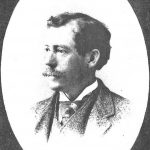
By Joe Gschwendtner; courtesy photos Earlier Castle Stone and New Memphis were settled, a traveler on the First Territorial Road (Daniels Park and later, Santa Fe), would have seen a circular stock pen owned by John Craig. Craig's small community became known as Circular Corral. When William Palmer's Denver & Rio Grande Railroad puffed through…
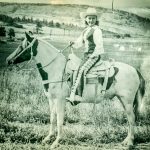
By Joe Gschwendtner; courtesy photos Near Due west Plum Creek's headwaters, Sandstone Ranch'south story is rich and colorful, a stitched-together history of many pioneers. The earliest was Charles Richardson, an 1873 homesteader who claimed the first parcel. A year later on, a bold woman for the times, Elizabeth Robinson of West Point, Illinois, homesteaded and became his…
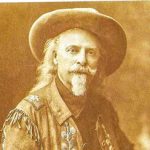
An American original By Joe Gschwendtner; courtesy photos An unsullied hero is rare in these times. Unusual too, is a person who defined an era and culture simultaneously. William F. Cody was an egalitarian when civil rights were ignored or violated in a rush to settle new frontiers. If, as parents today, we seek antidotes…
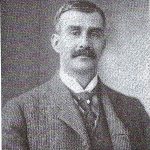
Past Joe Gschwendtner; photos courtesy of "Our Heritage: People of Douglas County" Our early Douglas County pioneers knew well the meaning of the "Wild, Wild Westward." They lived its hardships, hurting and unpredictability. Whether from Europe or the Eastward Coast, the life left behind was more urbane. Quiet. Civilized. And so was it for Samuel (Sam)…

Article and photos by Joe Gschwendtner Joe Bucknam, traveling salesman from Iowa, plant his mode to Denver with wife Minnie in 1907. Finding fascination in the Sedalia area, they founded the Woodbine Ranch in Jarre Canyon in 1915. The main guild was a substantial, multi-use edifice. Decorated to Joe's rustic tastes, it showcased vintage weapons,…
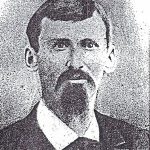
Commodity and photos past Joe Gschwendtner; photo courtesy of the Douglas Canton History Research Center Built-in in 1850, Isaac Jegirtha (I.J.) Noe hailed from Charlestown, Indiana. Afterward a common education, he devoted his early years to farming. That was, until he fell in love and married Jennie Caine of Clark County in 1878. Meanwhile, his…
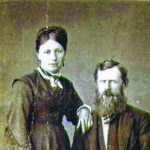
Commodity and photo by Joe Gschwendtner; courtesy photo To study Douglas Canton'southward early history is to dig into events around the headwaters of Plum and Cherry creeks. Nowhere is it more colorful than the upper Plum Creek basin, where John Perry, Ben Quick and John Kinner harnessed their lives to the spectacular loftier-land meadows. In…

Unfinished symphony Past Joe Gschwendtner; courtesy photograph Hotel Nanichant was completed in 1889 to accommodate visitors to the planned Village of Lake Wauconda, its Native American name meaning repeat. In 1891, Bela Hughes' son-in-police force, Charles Roberts, built his own dwelling there calling information technology the Manor House. It is even so in employ today every bit the Perry…
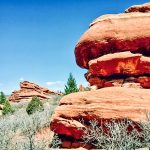
Article and photo by Joe Gschwendtner; information sourced from Fading Past: The Story of Douglas Canton, Colorado by Susan Consola Appleby Periodically nosotros golf at Perry Park. When on the course, it is impossible not to be drawn into the sheer, raw beauty of the place. Like Roxborough Park, this tucked-away enclave captures true Colorado…
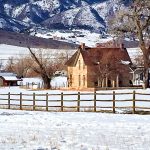
Article and photo by Joe Gschwendtner Ben Quick was built-in in Monroe County, Ohio in 1828. Orphaned at 10, he took interest in carpentry and by 16 had become a carpenter's apprentice, moving to Missouri with his brother Cornelius. Daring to dream large, when word of the golden strike at Sutter's Mill rocketed eastward in…
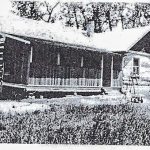
By Joe Gschwendtner; photo courtesy of Carol Oliver Lyons Long before Little Orphan Annie appeared in American cartoons in 1924, comparable hardship stories like hers played out daily in the American west. Such was the early life of Elizabeth "Lizzie" Field and her family, originally from Wesleyville, Pennsylvania. As an xi-year-old, Lizzie came inauspiciously into…
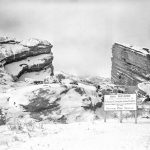
Past Joe Gschwendtner; courtesy photos The stock market crashed on Black Friday in October 1929, ending the Roaring '20s. That day marked the beginning of the greatest economic downturn these U.s.a. have ever known. President Franklin Roosevelt sought ways for the federal government to stimulate the economic system. 1 program was the Civilian Conservation Corps…

Article and photo by Joe Gschwendtner; photos courtesy of Juni Fisher Historical research is fascinating. Ane clue leads to another and remarkable stories are unearthed. Jarre Canyon west of Sedalia has plenty. Juni Fisher, award winning vocalizer, songwriter and entertainer memorializes her colorful Sedalia heritage in her "Gone for Colorado" album. Alphonse Jarre came to…
By Joe Gschwendtner: photos courtesy of Denver Public Library The Roaring '20s in the Wildcat Mountains did not lack excitement. Bootlegging and gambling were rampant, specially in Larkspur, where the Feds found and busted the two largest moonshine stills in the county. Their proprietors would practise 3-5 years in the pen. Perchance the headline issue…

Past Joe Gschwendtner; photo courtesy of the Colorado Historical Society Aye he was. Tom Campbell. Dead. Finished off with a bullet in George Manhart's dance hall in Sedalia on Saturday, May 6, 1899 every bit reported in The Castle Rock Periodical at the fourth dimension. Campbell, aka Thomas Jackson, was a tough customer. Well-known in Douglas County…
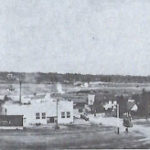
Commodity and photograph past Joe Gschwendtner; photograph courtesy of the Colorado Historical Society Every bit we left 1871 Huntsville in the throes of expiry in our Wildcat Lore final month, commerce shifted rapidly south to Larkspur. This was due in no small measure to relocation of the post office and arrival of the Denver & Rio…
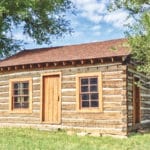
Article and photo past Joe Gschwendtner; photograph courtesy of the Colorado Historical Gild Named for Colorado's fourth Territorial Governor, Huntsville history was fleeting but colorful, beginning in 1859. Located on the Territorial Route north of Larkspur, Huntsville owed its existence to lumbering, clay extraction, traveler accommodations and security. In 1858, Iowans Sarah Ann and James…
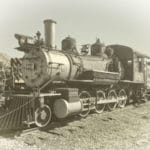
Past Joe Gschwendtner; photo courtesy of Brett Wiebold Readers may call up the grit and determination of General William Jackson Palmer in bringing narrow gauge rail service to Douglas Canton. All the same few know of the places information technology served, many of them ghost towns today. Please join u.s.a. back in time on the southbound Denver & Rio…
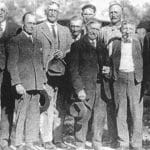
By Joe Gschwendtner; photograph courtesy of Scott Terhark Collection, Douglas County History Research Center, Douglas County Libraries Not long after the Homestead Human activity opened the Due west, some Douglas County settlers became farmers and ranchers. Rolling terrain of minor valleys and gulches with depression density population offered vast open areas rife with protein-rich grasses ideal for…
By Joe Gschwendtner; photo courtesy of Newspaperarchive.com People and towns came and went in the early days of statehood. Had it not been for an obscure notation on a map, the once thriving town of Lehigh would have been a forgotten Mutiny town. In 1878, coal was a valuable commodity in an industrializing world. When…
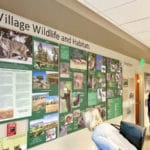
By Joe Gschwendtner; photos by Terri Wiebold In late March, the formerly bare-walled community room at the Castle Pines Homes Association building received a makeover. A in one case humdrum coming together space, it now includes a mini-museum focusing on the get-go 100 years of Wildcat Mountain history. No small project, the curation began from scratch. The procedure…
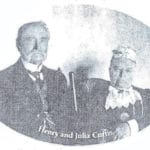
By Joe Gschwendtner; photos courtesy of Archives & Local History – Douglas County Libraries In 1849, Henry H. Curtis took Julia Paddison to be his bride in Due south Wales. He was xix, she 21. Seems that Henry, an apprentice jeweler was summoned to repair the Paddison family clock. Clearly, time was on Julia's side, equally…
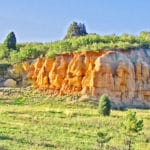
By Joe Gschwendtner; photos courtesy of Kevin Grenier, Douglas Canton Historic Preservation In Douglas County's early on years, hillside lumber yielded logs which were the basic building blocks of construction. Whether log cabins or storefronts, wood carried the day. Rhyolite was used periodically, only for larger and commercial projects. It was as well in limited supply, even…
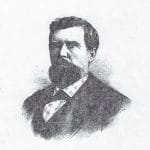
By Joe Gschwendtner; photo courtesy of Heritage Collection "History of Metropolis and Arapahoe County," 1880 Major D.C. Oakes struck pay dirt in the California Gilt Blitz. Returning to Iowa in 1853 to marry, he invested his $half dozen,000 profit in a contracting business. When the business faltered and money dwindled, he chased rumors of gilded in…
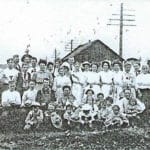
By Joe Gschwendtner; photos courtesy of Sedalia Celebrated Fire House Museum and Gardens Harriet (Hattie) Davis Beeman was made of tough stuff. Kevlar earlier its time. Built-in in Denver in 1885, at historic period 9 she moved with parents and family to a farmstead on Upper Riley Hill Road (Daniels Park). She attended Round Top School…
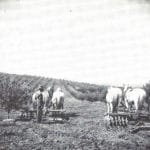
Past Joe Gschwendtner; photos courtesy of Douglas County Historical Society Ironically captured primarily in blackness and white, Sedalia'southward story is actually quite colorful. She had four names. She was sold out. She vied for county seat. She was fix upon by grasshoppers in 1873. And, she experienced a shootout at the Round Corral. Permit's start…
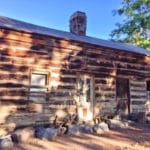
Article and photograph past Joe Gschwendtner Sylvester Richardson was a driven homo. Raised in New York'southward Catskill Mountains, he worked in the family vineyard near the Hudson River. No vintner he, and in his 30s dreaming bigger dreams, Richardson migrated west, first to Wisconsin. There he attempted to capitalize on his horticultural experience by starting…
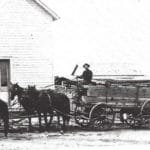
By Joe Gschwendtner; photos courtesy of Our Heritage and People of Douglas County FARMING: Early pioneers had limited options for a livelihood. Most were in agriculture of some kind, as subsistence was the first order of business. Through trial and fault, settlers found the workable methods, soil and h2o sources that could back up their needs.…
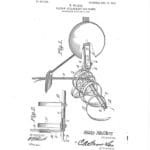
Past Joe Gschwendtner; photograph courtesy of The states Patent role and Douglas Canton Library History Research Section Willis Walker likely often lived in the shadow of his wife Sarah, known nationwide and internationally for her work with Colorado wildflowers. On closer historical inspection, we notice that Willis was no shrinking violet. Born in 1858 and afterwards…

By Joe Gschwendtner; courtesy photo In 2003, Castle Pines Village excavations gave rise to a Nancy Drew-manner mystery. While excavation utility trenches for Hidden Pond Road, construction workers uncovered the grave of a young woman, near likely buried before the Homestead Act of 1862 opened these lands up to private ownership. Unidentified bodies are a…
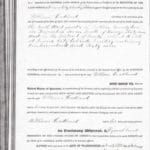
By Joe Gschwendtner; photograph courtesy of The Agency of Country Reclamation (U.South. Government) William Headland was an early homesteader in the Castle Pines Hamlet surface area. Having paid $200 cash for his 160 acres in 1870, his holdings centered on Saxon Place. By 1880 he had comfortably settled in on his ranch and plant himself a…
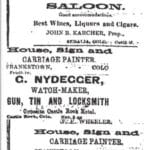
Past Joe Gschwendtner; photograph courtesy of the Castle Rock Journal John B. Karcher of Sedalia was a Frenchman by birth. A big landholder in Alsace Lorraine, he was politically and socially agile and a 32nd caste Bricklayer. In his tardily 30s he was expelled from French republic because of his anti-Napoleonic tirades. His belongings was seized…
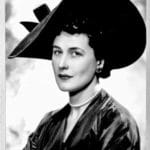
Part 3 of three By Joe Gschwendtner; photo courtesy of Cherokee Ranch & Castle Much has been said and written of Tweet Kimball, Cherokee Ranch owner who died in 1999. What often remains uncaptured is her essence. At her very core she was a naturalist, appreciative and dedicated to her earth of animals, the environment…
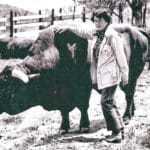
Role two of iii By Joe Gschwendtner; photo courtesy of Cherokee Ranch & Castle Final month, we tracked the history of the Cherokee Castle and Ranch after Tweet Kimball acquired it in 1954. Indeed, her impact on virtually everything she touched and those she encountered was outsized. Comfortable in rugged ranch hand garb or equally…
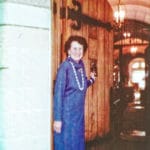
Part one of three By Joe Gschwendtner; photo courtesy of John Lake and Meg Anderson Were there a Colorado Mt. Rushmore, Tweet Kimball's profile might well be chiseled in that location. Built-in in 1914 Tennessee, where women wielded limited political power, Bryn Mawr-educated Mildred Genevieve Montague "Tweet" Kimball never got the message. After acquiring Charlford Castle in…

Article and photos by Joe Gschwendtner The Lawrence C. Phipps Jr. who purchased the Kistler and Welte properties and named information technology Highlands Ranch was connected and wealthy, the son of a Carnegie steel magnate and U.S. Senator from Colorado. His position in life allowed for many uncommon opportunities, and he seized them often and successfully.…
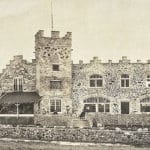
By Joe Gschwendtner; photos courtesy of Josephine Marr's "A Historical Journey" and the Douglas County History Research Centre Riveting history ofttimes includes stories of places larger than life. In the northern Wildcat Mountains, there were two castles of note: the Springer Cross Country Mansion and the Cherokee Castle. Somewhat on the smaller side, neither compared…
By Joe Gschwendtner; photograph courtesy of Amy and Dave Flanagan Last month, The Connexion left readers with Arthur (Art) Ceresa and his married woman Mary, "a gracious woman," who slowly, shrewdly gained control of today's Surrey Ridge area from the Schweigers and brothers Joseph and Alois Kroll at the astounding per acre price of $vi.25. The…

Article and photos by Joe Gschwendtner Joseph Kroll and John Schweiger Sr., likely met in the Leadville mines after emigrating from the Austrian Empire around 1870. With modest savings and presumed collaboration, they constitute their way to our Wildcat Mountains. Through Homestead Act acquisitions and the diligence of Max and John Schweiger Jr., the families…
By Joe Gschwendtner; photo courtesy of "Walk with our Pioneers – A Drove," past Alice 1000. Thompson In our July segment of Mutiny Lore, we encountered the Wolfensbergers, Reynolds and Bardells, homesteading chance-takers in these Wildcat Mountains. Dreams came true only for the Wolfensberger families while the others were crushed by accidents and poor health.…
Past Joe Gschwendtner; photos courtesy of "I'd do it again" by Sarah A. Gleason, Copyright 1982, Century One Printing Sarah Gleason was an merely child of Irish immigrants born in Colorado Metropolis. She taught schoolhouse in Douglas, Weld and Jefferson Counties from 1926 to 1978 and was widely recognized as an extraordinary teacher. During…
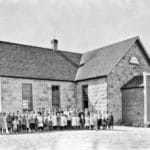
Article and photos past Joe Gschwendtner; photograph courtesy of Douglas Canton History Research Center Public didactics was and then important that it was addressed in the Manufactures of Confederation past our Founding Fathers. The 1785 Ordinance for the Western Territory provided for schools by reserving sections NW16 and SE36 of every township open up to homesteaders. Local…
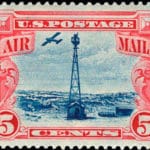
Article and photos past Joe Gschwendtner Sixteen years after the Wright brothers' ballsy 1903 first flight, night-time navigational aids (other than bonfires) were non-real. With the demand for airmail growing ever stronger, night flying was inevitable. Two pilots, Don Bruner and Jack Knight, figured it out. Bogus beacons on loftier terrain could be used…
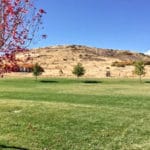
Article and photos past Joe Gschwendtner Thirty-six one thousand thousand years ago a massive volcanic eruption near Mt. Princeton hurled molten stone and gases into Douglas Canton. Traveling nearly 100 miles per hour and landing in parts of Park and Teller Counties equally well, the quick cooling ash created 15-30 human foot layers of "Wall Mountain Tuff" classified…
Turn-of-the-century Douglas Canton pioneers were tough and simple. They lived in the moment. Dreams of their future were marred past hostile Indians, locusts, parched lands, stale-up streams and rattlesnakes. Long-term planning didn't come naturally. Surprisingly, there were two remarkable people, mere miles apart, who envisioned the future of our canton and acted in unique ways…
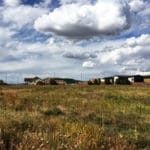
Article and photos by Joe Gschwendtner Events in Colorado history didn't really advance until the 59ers swarmed the Pikes Peak region, Russellville (near Franktown) included. Past 1861, Colorado would get a territory and in another 15 years, attain statehood. Those 17 years to statehood were tumultuous. No one suffered greater upheaval than the Native American. …
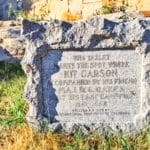
Commodity and photograph past Joe Gschwendtner Wildcate Lore Beginning this month, The Connection will exist featuring a column titled "Wildcat Lore." As it turns out, the Castle Pines Connection serves residents of the Wildcat Mountains, a name pioneers and historians gave to high country paralleling I-25 from Highlands Ranch and Lone Tree due south to Castle…
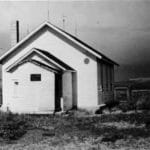
Information provided by Douglas County; photo courtesy of the Larkspur Historical Society Recognizing and celebrating the month of May as Archæology and Historic Preservation Month, Douglas County will offer a rare glimpse into the functioning of one-room schools of the early on 1900s with tours and an Open Firm of the historic Greenland School on Saturday,…
brobstthismillond1946.blogspot.com
Source: https://www.castlepinesconnection.com/wildcat-lore/
0 Response to "Irish Lore Last Person to Run Over the Hill Is Never Seen Again"
Post a Comment