4th Grader Is Below Reading Grade Level
How Many Students are Actually Reading Below Grade Level?!
Hey there friends!
Today was ane of those days, the kind of day where nosotros get all fired about something. If you lot know us well at this bespeak, you know that we practice this often! If yous've e'er been to ane of our webinars or online trainings - y'all've heard u.s.a. mention that we're not yelling, we're just really passionate most this.
We were discussing statistics…
and if y'all know us well you lot know nosotros LOVE statistics and data (if you're a data nerd also, you lot can sit with us - and if you're not, that'south all good too because we've got you covered!!!)
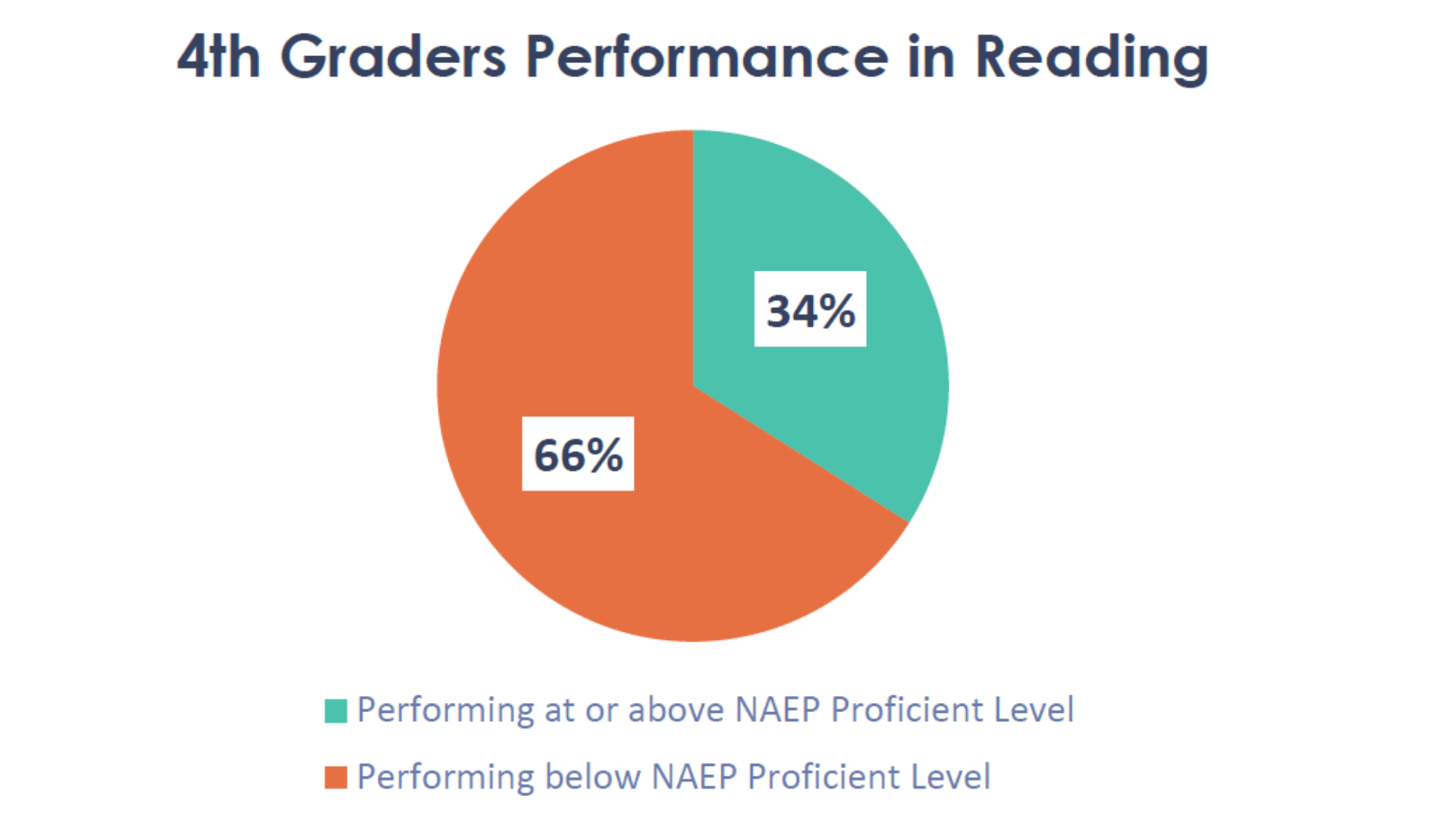
We were reviewing the statistics that were pushed out past the Usa Section of Education in 2019 reviewing the National Report Card as it pertains to students and their ability to read at a proficient level past the fourth dimension they are in the 4th grade.
And if you know these studies, the statistics are shocking.
66% of students in the Us are not reading at a good level.
Come again?
Two-thirds of our students aren't reading at grade level?
-
U.Due south. Section of Instruction, Institute of Education Sciences, National Middle for Instruction Statistics, National Cess of Educational Progress (NAEP), 2019 Reading Cess.
YIKES!
And here's the deal - when nosotros recollect about this number nosotros can showtime to pause it down and see how this could happen.
Let's think about a general pedagogy classroom…
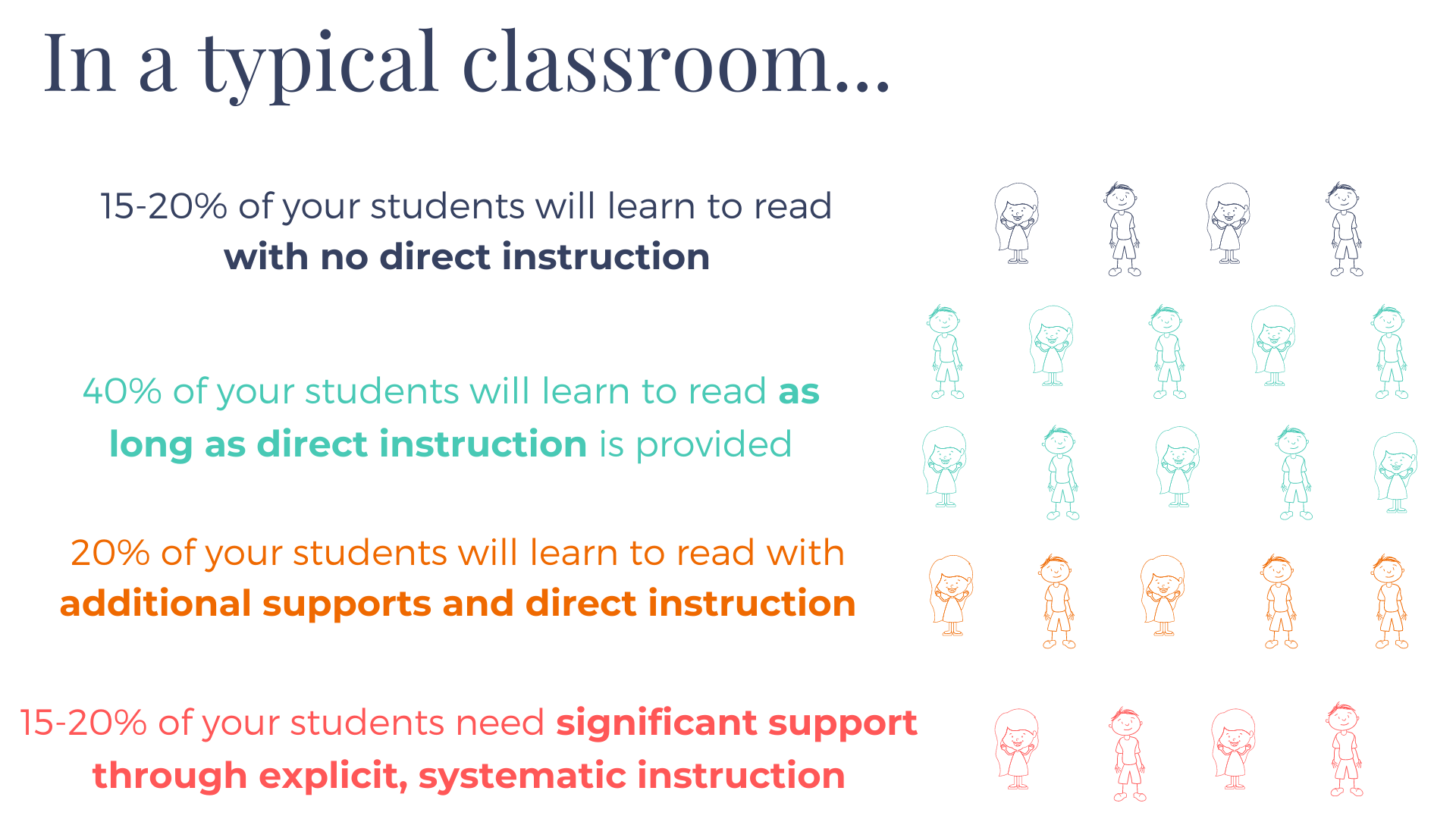
And so based on these statistics, we know that nosotros've got about forty% of students who could benefit from boosted support and could foreseeably score "below good" on a measure of reading performance (the red and orange students) who would typically autumn into what nosotros call Tier 2 or Tier iii pedagogy.
But…these statistics are showing u.s. something even more concerning.
These statistics are showing us that over HALF of the students that should exist learning to read with whatsoever direct instruction are still non reading at a skillful level.
So let's think about this -
Not Simply are students who are identified every bit needing extra back up struggling to read finer, simply HALF of the students who are not receiving any additional assistance are ALSO struggling to read.
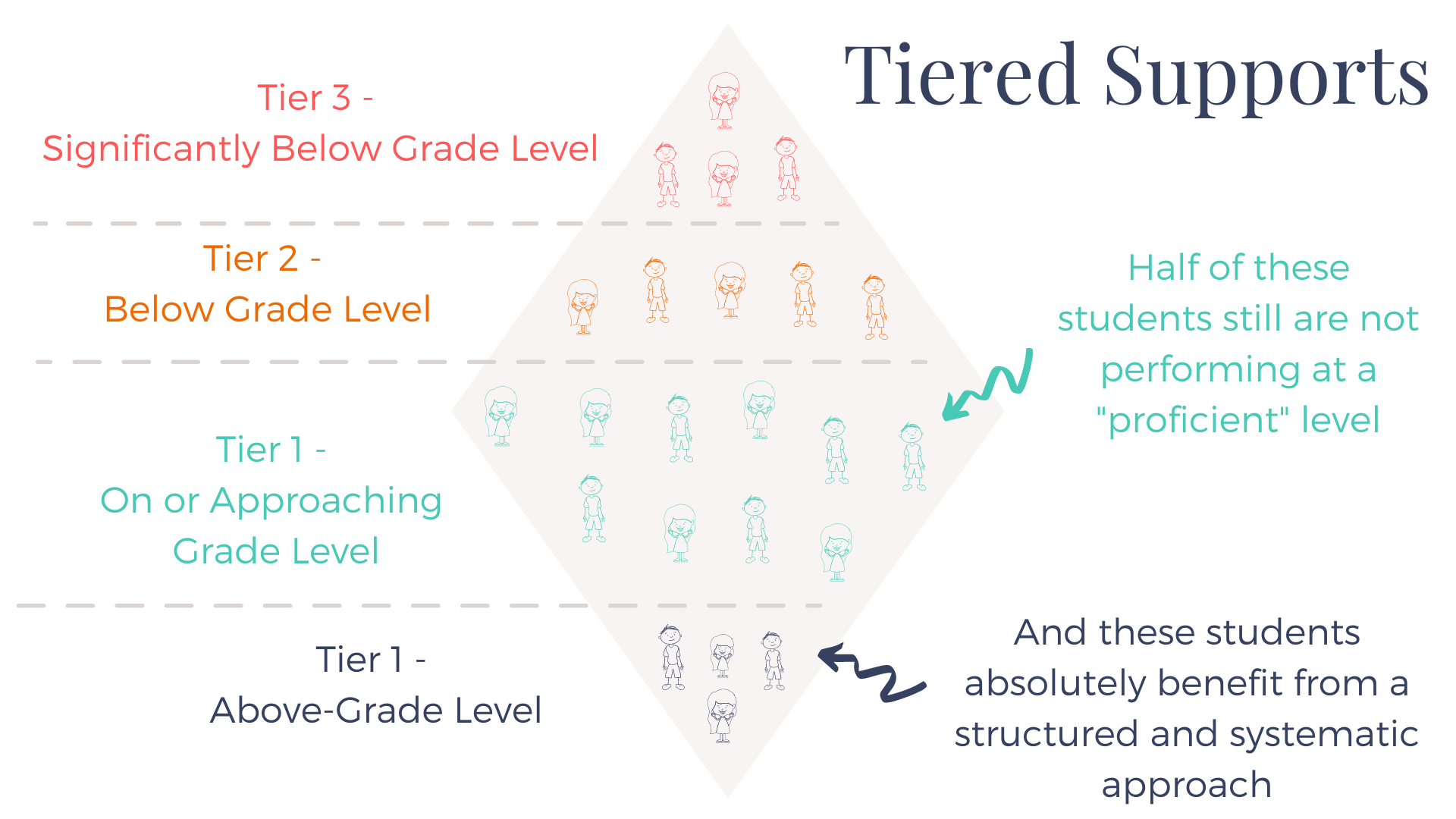
And then what this tells us is that we ABSOLUTELY must be implementing frameworks, systems, strategies that align with the scientific discipline of reading. If y'all're new to the idea of evidence-based or enquiry-based reading education and desire to larn more about that - bank check out our 7 Steps to Reading Intervention that Works!
Merely what we also CANNOT neglect to recognize is that students may exist struggling to read proficiently for a number of different reasons.
Some may struggle with decoding (sounding out the words) and others may struggle with vocabulary or comprehension, and some students struggle with decoding, vocabulary, and comprehension!
Nosotros cannot assume that just considering nosotros know students are struggling, that nosotros know how to solve the issue. We must brainstorm diving in and thinking critically about our educatee profiles and how nosotros can support ALL struggling readers.
The all-time manner to know where our students are at is to have solid measures we can use to assess our students and know what is causing the lack of proficiency in reading.
Is information technology phonological awareness knowledge? Phonics noesis? Vocabulary? Comprehension? We MUST begin here so that we can start changing the trajectory of our struggling readers!
So permit's commit to starting by looking at where our students are at and where those breakdowns are occurring and from there we tin brainstorm designing a plan that's going to go these students to class-level proficiency!
Alright so, phew there it is - like I said, our team meetings can get a little intense when we start thinking about these things. Nosotros're not yelling, nosotros're just passionate, and nosotros know you lot are too - because yous're here reading this blog and doing everything you can to support your students. We're grateful for yous and know that together nosotros can start making progress to flip this trajectory for struggling students.
brobstthismillond1946.blogspot.com
Source: https://www.ascendlearningcenter.com/blog-highlights/howmanystudents
0 Response to "4th Grader Is Below Reading Grade Level"
Post a Comment